Masonic rituals developed from the ceremonies, symbols, and customs that shaped Freemasonry as lodges evolved from operative masonry into a fraternal institution. By examining that development, we can better understand why Masonic traditions remain recognizable across different places and periods.
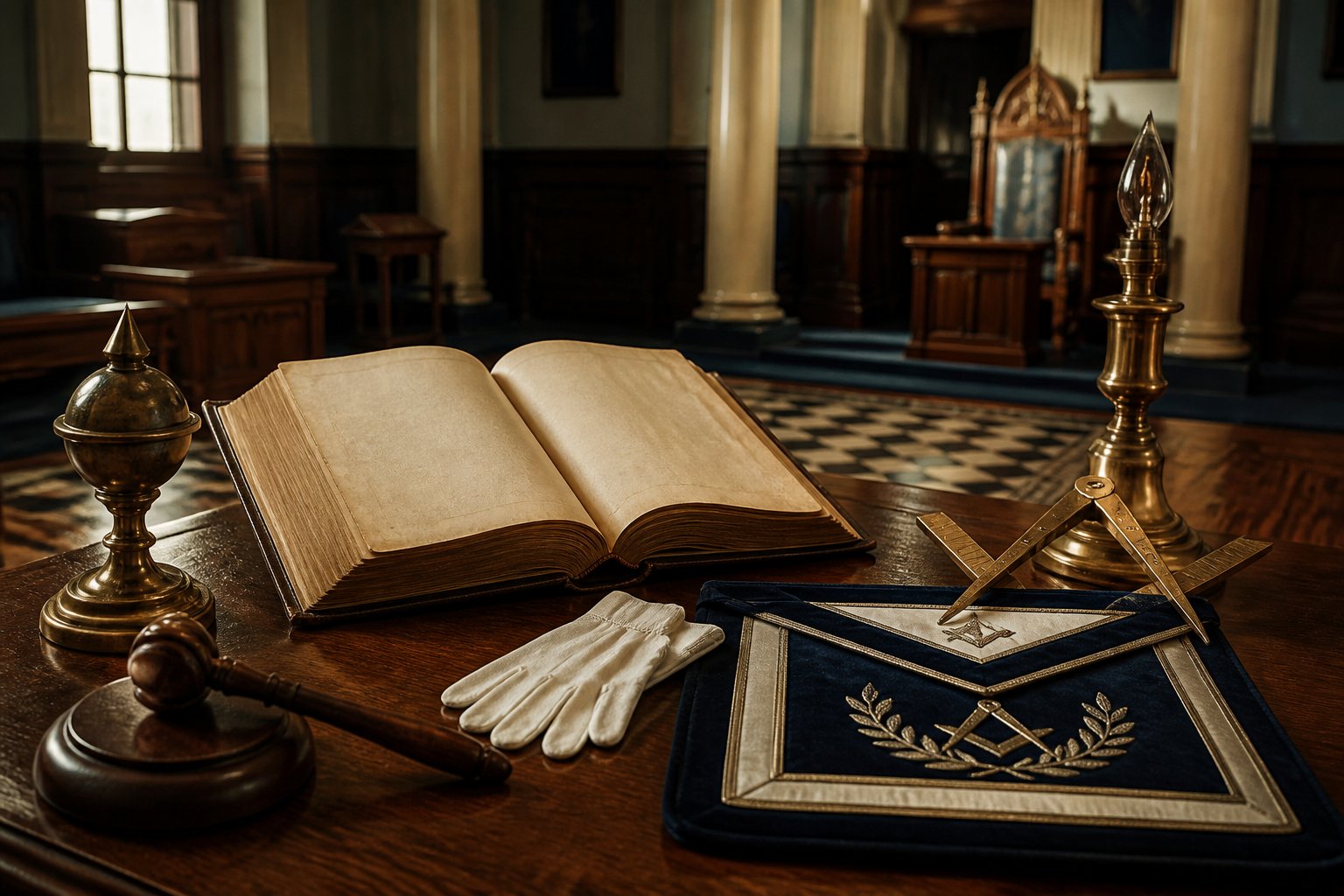
Masonic rituals use structured ceremonies and symbols to teach ethical principles, strengthen fellowship, and connect modern lodges with the organization’s historical development. We will trace Freemasonry’s origins, explore the structure and meaning of its rituals, and consider how lodges continue to preserve and adapt these traditions.
Origins and Development of Freemasonry
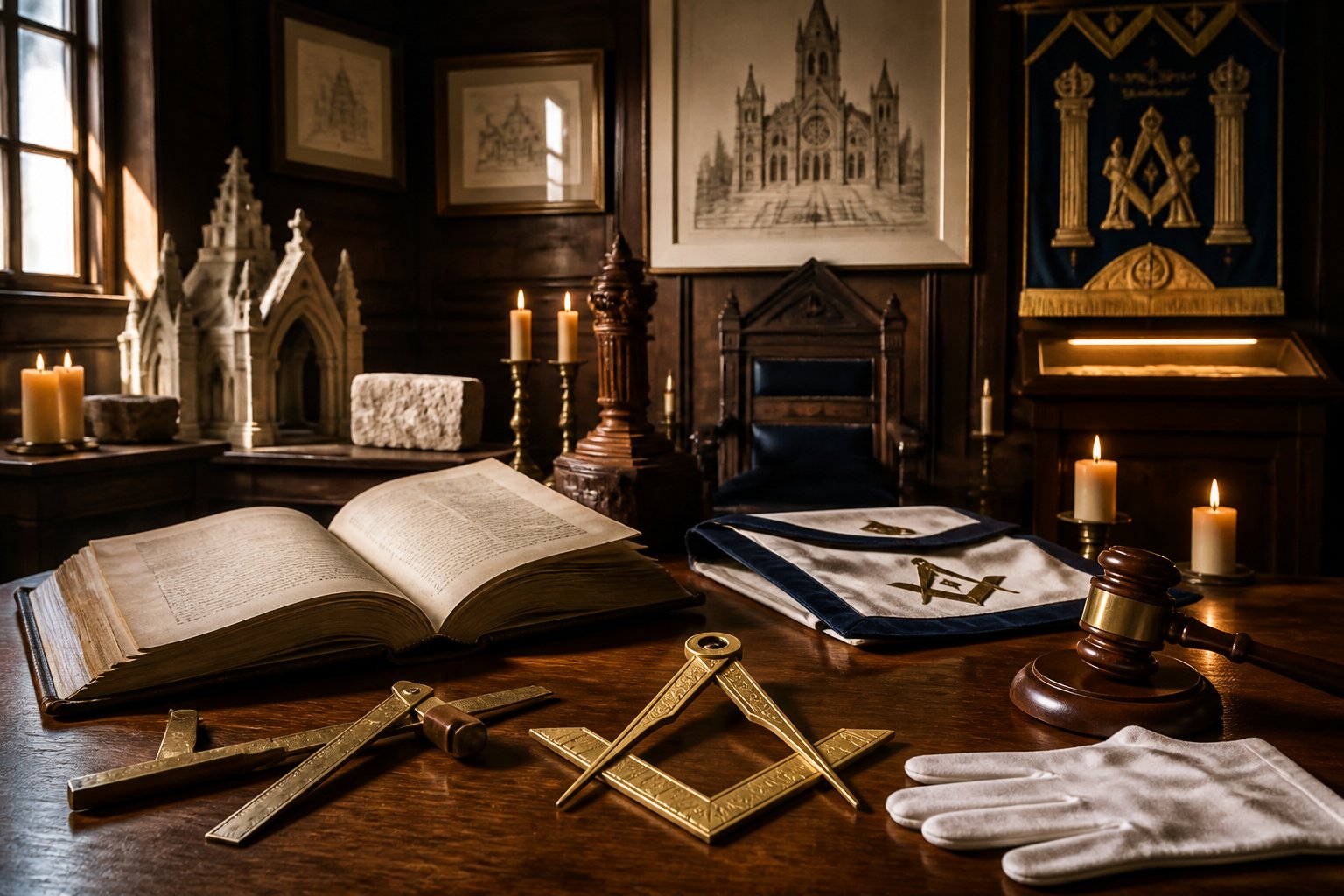
We can trace Freemasonry’s documented development from medieval stonemason guilds to early modern associations that admitted non-operative members. During the eighteenth century, organized lodges and grand lodges established ceremonies, rules, charitable practices, and symbolic traditions that shaped modern Freemasonry.
Medieval Guild Influences
Medieval stonemasons worked within regulated craft communities that controlled training, standards, and professional conduct. Apprentices advanced through defined stages, while experienced craftsmen demonstrated their competence before receiving greater responsibilities. Lodges or meeting places supported instruction, administration, and fellowship.
These working practices influenced later Masonic language and symbolism. Tools such as the square, compass, and level acquired moral meanings in ceremonies, even though medieval masons originally used them for construction. Manuscript constitutions from the late medieval and early modern periods also preserved legendary histories, regulations, and ethical expectations associated with the craft.
The evidence does not establish a direct, uninterrupted institution extending from medieval building lodges to modern Freemasonry. Instead, we see older guild customs and texts later adapted by organizations with broader social and symbolic purposes.
The Rise of Speculative Masonry
From the seventeenth century, some lodges began admitting men who did not practice stone masonry. These “accepted” or speculative members treated the craft as a framework for moral instruction, personal discipline, and fellowship rather than as a trade.
This change reshaped lodge ceremonies. Initiation, advancement, passwords, obligations, and allegorical teachings became central features, while architectural tools served as symbols of ethical conduct. Early records show that ritual forms varied by place and period, so no single ceremony represents the entire early history of Freemasonry.
Printed exposures and lodge records from the eighteenth century reveal increasing standardization. They also show disputes over wording, degree structures, membership rules, and the relationship between local customs and wider Masonic authority.
Formation of Grand Lodges
The formation of the Premier Grand Lodge of England in 1717, followed by its formal organization in 1721, marked a major stage in institutional development. It helped coordinate participating lodges, appoint officers, regulate recognition, and promote shared constitutions and ceremonial practices.
The publication of James Anderson’s Constitutions of the Free-Masons in 1723 provided rules, charges, and a historical narrative for the English movement. Other grand lodges soon appeared in Ireland and Scotland, each maintaining distinctive procedures while exchanging members and influences.
As British trade, migration, and imperial administration expanded, lodges spread to North America, the Caribbean, Europe, and other regions. Local bodies adapted ritual language and customs, producing both common Masonic features and significant national variations.
Ritual Structure, Symbols, and Continuing Traditions
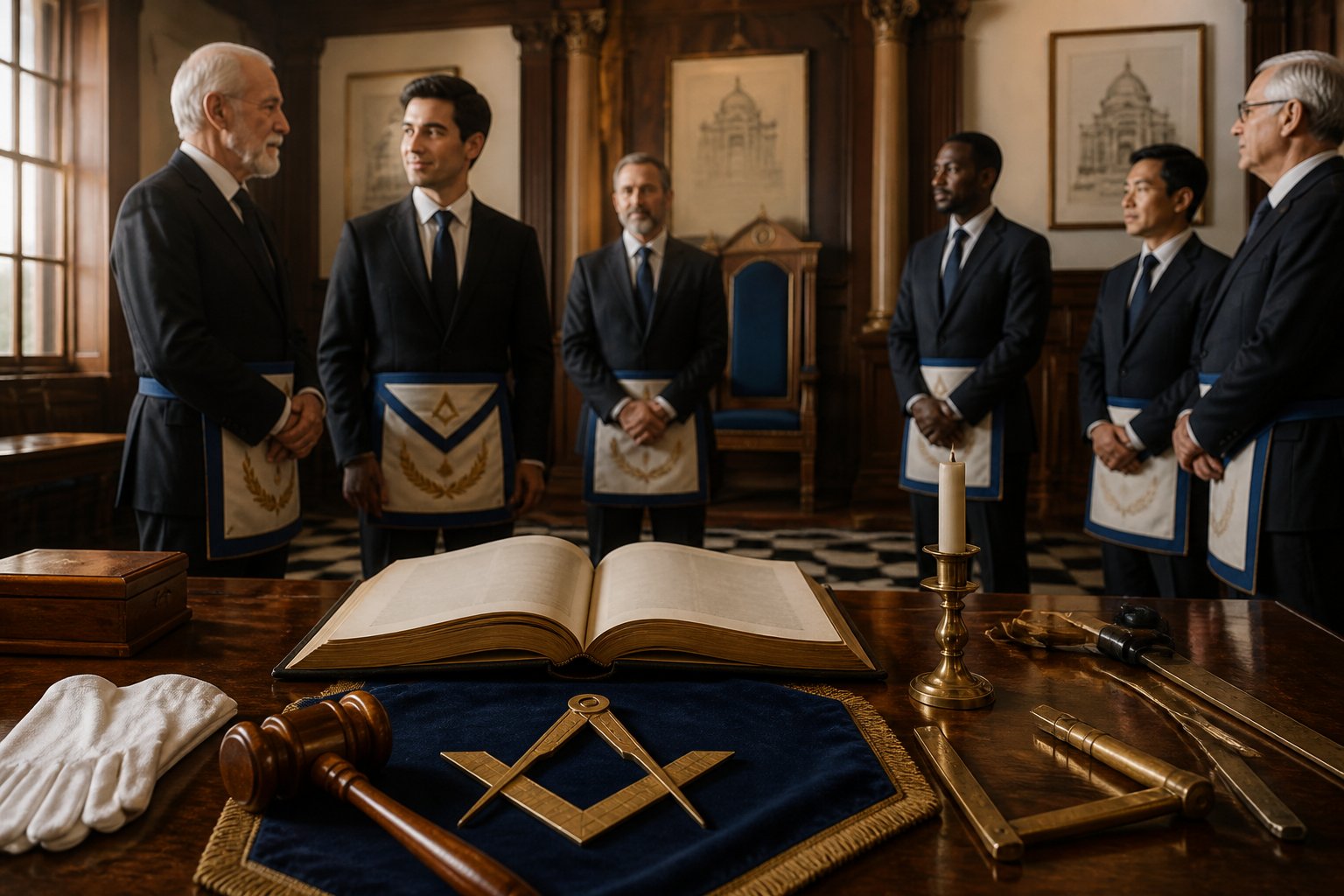
We can understand Masonic practice through its staged degree ceremonies, allegorical symbols, and lodge customs. These elements teach ethical conduct while allowing individual lodges to preserve local traditions and adapt their public activities to changing communities.
Degree Ceremonies and Moral Instruction
Most Masonic systems organize their central instruction into three symbolic degrees: Entered Apprentice, Fellow Craft, and Master Mason. Each degree uses a formal ceremony involving spoken passages, movement through the lodge, officers’ roles, and instruction presented through allegory. The ceremonies differ among jurisdictions, so no single ritual text represents all Freemasonry.
The degrees present moral development as a gradual process. We encounter lessons about personal discipline, learning, responsibility, loyalty, and the consequences of failing to act honorably. Ritual officers guide candidates through the ceremony, while lectures or charges explain the meaning of its symbols and duties.
Many lodges protect portions of their ritual as private practices. At the same time, public descriptions, historical publications, and authorized educational materials explain the broad structure without reproducing private words or signs.
Architectural and Biblical Symbolism
Masonic symbolism draws heavily on the tools and working practices of stonemasons. The square represents honest conduct, the compasses suggest restraint and moral boundaries, and the level expresses equality among members. The plumb commonly signifies upright behavior, while the trowel represents the work of joining members through goodwill.
The lodge itself often uses an architectural arrangement. Officers occupy designated positions, and the layout may include symbolic lights, columns, an altar, and representations of working tools. These features support instruction rather than serve as objects of worship.
Biblical narratives, especially the building of Solomon’s Temple, supply major themes in many Masonic traditions. Lodges may also use a volume of sacred law appropriate to their members’ beliefs. Requirements vary, but many jurisdictions ask candidates to affirm belief in a Supreme Being.
Lodge Customs and Modern Adaptation
Lodges maintain customs through regular meetings, formal openings and closings, officer elections, initiations, educational talks, and charitable work. Members typically address one another by fraternal titles, follow an established order of business, and observe protocols for visitors and ceremonies.
Traditions also vary by country, grand lodge, and individual lodge. Some lodges emphasize ritual accuracy, while others devote more time to historical study, fellowship, or community service. This variation reflects Freemasonry’s decentralized structure.
Modern lodges preserve core ceremonies while adapting administration and outreach. They use digital communication, publish historical research, support local charities, and hold public events where permitted. Recognition rules, membership requirements, and participation by women or mixed-gender organizations depend on each Masonic jurisdiction.