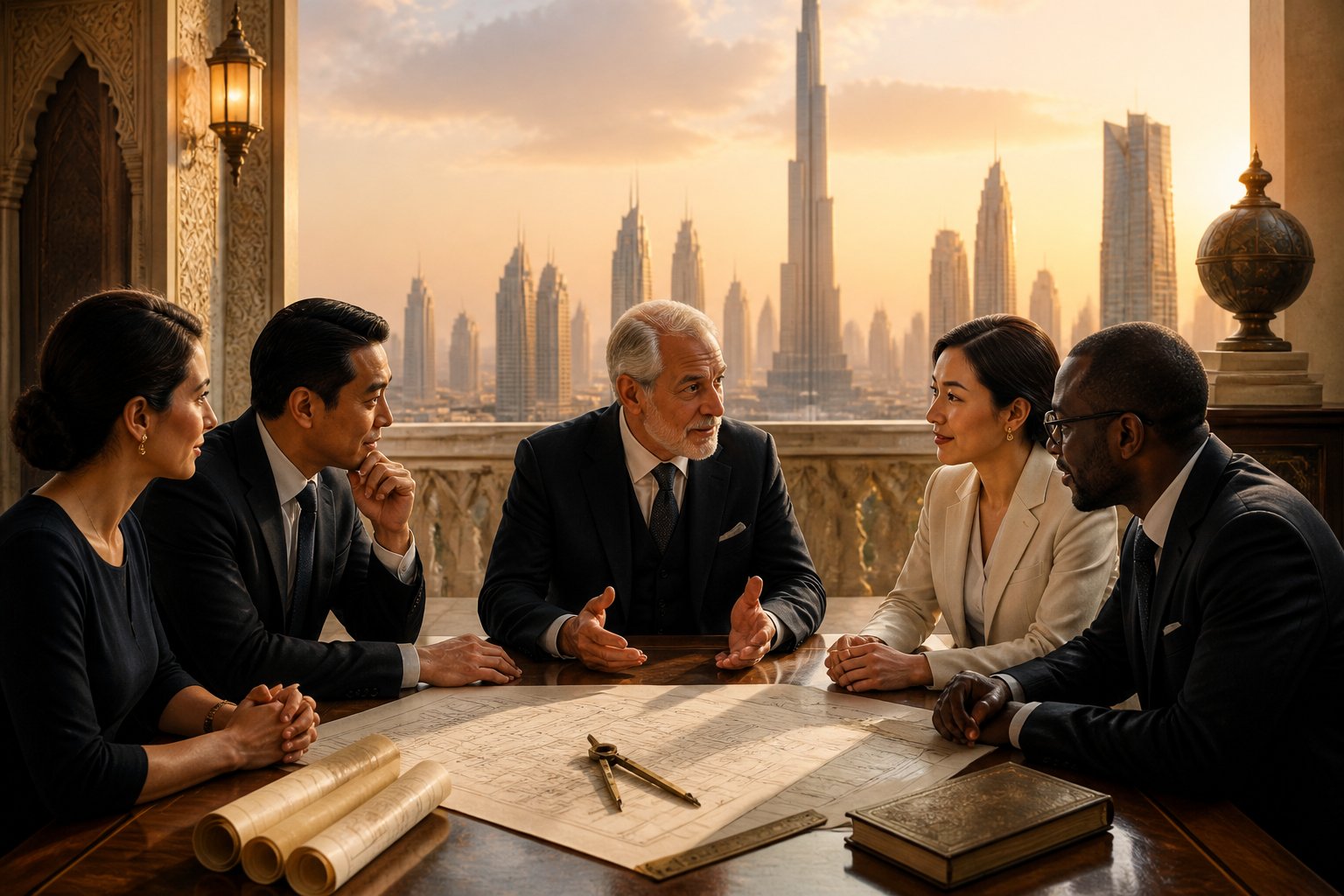
Dubai’s global profile has grown through visits from presidents, monarchs, business leaders, and cultural figures, reflecting its role as a center for diplomacy, trade, and international exchange. These visits also provide context for examining older networks that connected the region with Europe and the wider world.
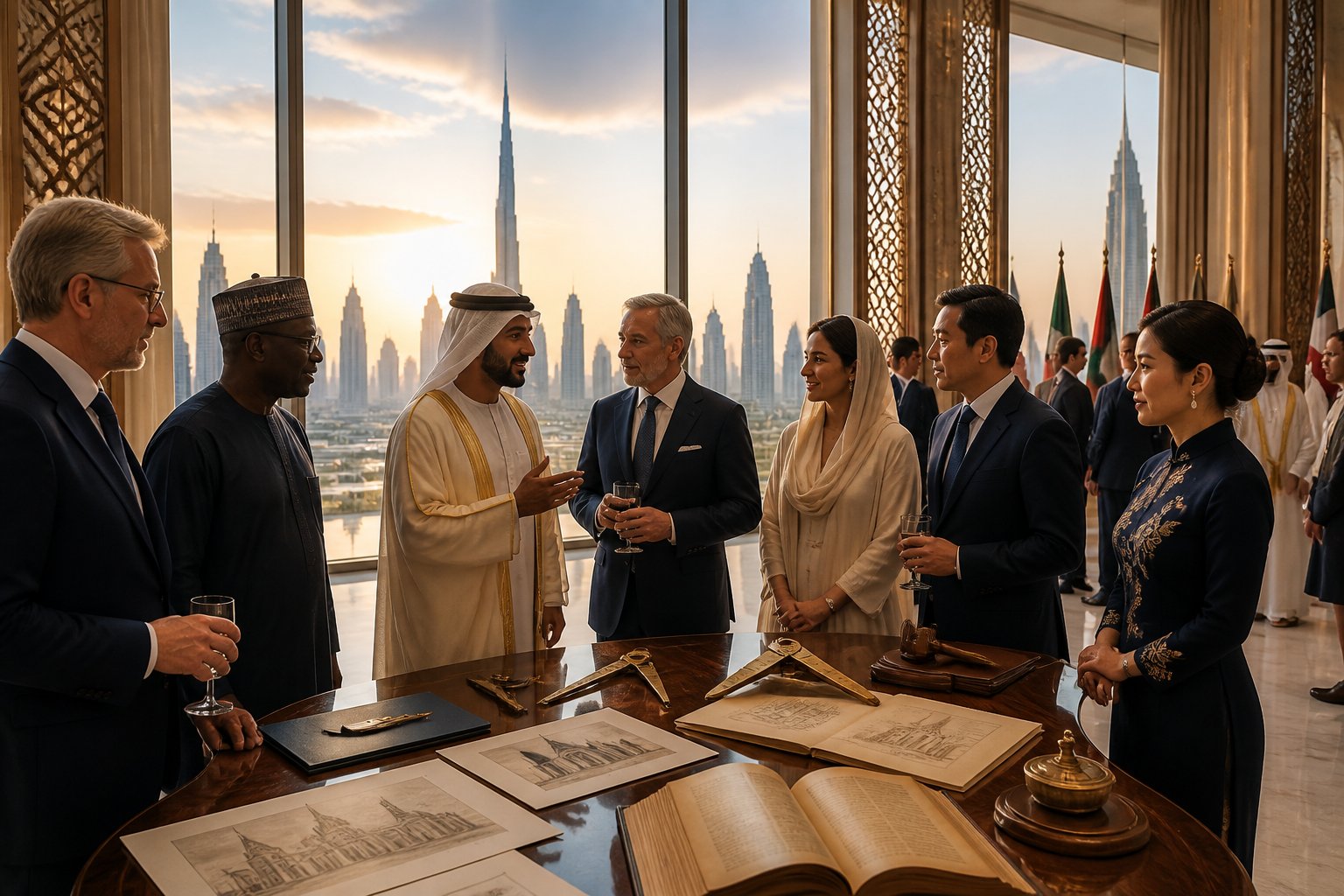
Freemasonry has historical links to the Gulf, but claims about its present-day activity in Dubai require careful verification because reliable public records are limited and local regulations matter. We can separate documented lodge history from speculation while exploring how Freemasonry developed internationally and how its modern image fits within Dubai’s changing social landscape.
Dubai’s Role in Global Diplomacy and Cultural Exchange
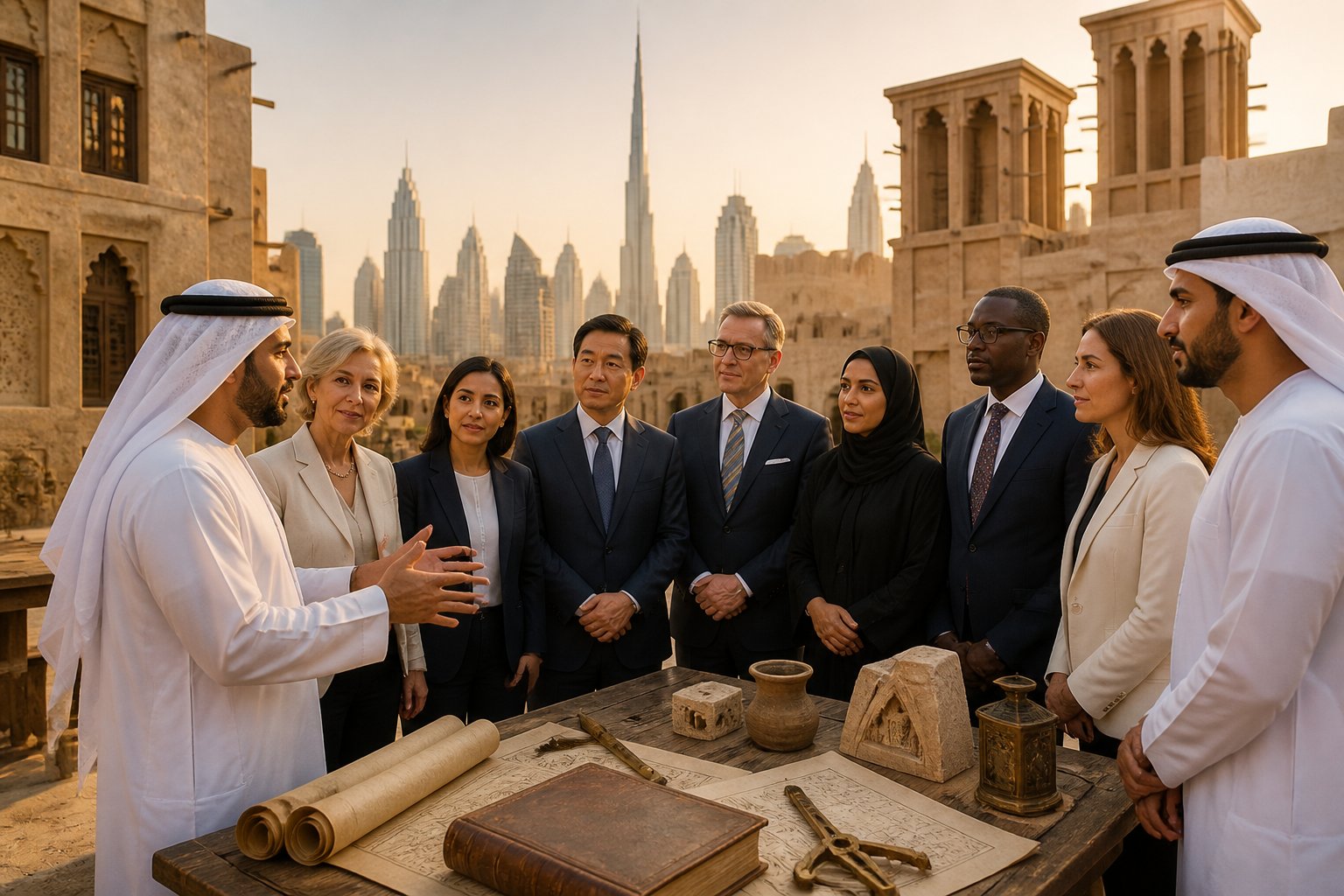
Dubai combines official diplomacy with cultural, commercial, and philanthropic engagement. Its museums, conferences, international businesses, and diverse population create practical settings where governments, institutions, and individuals exchange ideas and build relationships.
Notable State Visits and Royal Delegations
We can trace Dubai’s diplomatic importance through visits by heads of state, ministers, and royal delegations. These visits often combine formal meetings with tours of major development, cultural, and infrastructure projects, allowing foreign leaders to assess the UAE’s economic priorities and international partnerships.
Dubai also supports the UAE’s cultural-diplomacy strategy. Events such as ICOM Dubai 2025 brought museum leaders, policymakers, and cultural specialists from many countries together to discuss museums, identity, and international dialogue. Discussions involving Sheikha Latifa bint Mohammed and Noura Al Kaabi further highlighted the role of cultural institutions in strengthening connections between societies.
The city’s position as a trade, tourism, and transport hub reinforces these diplomatic contacts. International airlines, business forums, museums, and cultural festivals give visiting delegations opportunities to engage with both government representatives and the wider public.
Celebrity, Business, and Philanthropic Engagements
Celebrities, entrepreneurs, and philanthropists add another layer to Dubai’s global profile. Their visits often involve business conferences, investment activity, charitable initiatives, film and entertainment projects, or appearances at major cultural and sporting events. These engagements can introduce international audiences to Dubai’s institutions, lifestyle, and commercial environment.
We should distinguish public visibility from formal diplomacy. A celebrity appearance does not represent government policy, while a business partnership does not necessarily indicate a diplomatic agreement. Nevertheless, these activities support people-to-people connections and can encourage tourism, investment, and cultural exchange.
Dubai’s private sector also contributes directly to this process. Public-private collaboration in museums, creative industries, hospitality, and education gives international visitors additional ways to participate in the city’s cultural life. Business leaders and philanthropic organizations therefore help extend Dubai’s international relationships beyond official state channels.
Freemasonry’s Historical Development and Modern Context
Freemasonry developed from European craft traditions into a speculative fraternity centered on ethical conduct, mutual support, and symbolic instruction. Its modern presence varies by jurisdiction, especially in the Gulf, where legal rules, religious considerations, and public visibility shape how private associations operate.
Origins, Principles, and International Expansion
We can trace Freemasonry’s institutional origins to Britain and Ireland during the late seventeenth and early eighteenth centuries. Earlier stonemasons’ guilds regulated training and professional standards, but the modern movement admitted men who were not working builders. In 1717, four London lodges formed the first Grand Lodge of England, helping establish the jurisdictional model that later spread internationally.
Freemasonry uses ceremonies, allegories, and building symbols to discuss personal responsibility, integrity, charity, and fellowship. It is not a single global organization. Independent grand lodges govern local systems, and their recognition of one another depends on constitutional rules and historical relationships.
British expansion, trade, military movement, and colonial administration carried lodge traditions across Europe, the Americas, Asia, Africa, and Australasia. By the nineteenth century, lodges often served as social and charitable associations for professional, commercial, and public figures. Their private rituals and membership networks also encouraged conspiracy theories, although documented lodge activity generally concerns fraternity, moral education, and charitable work.
Freemasonry in the Gulf: Legal and Cultural Considerations
We should treat claims about Freemasonry in Dubai and the wider United Arab Emirates cautiously. Publicly documented information about permanent, officially recognized lodges in the UAE remains limited, and online references may confuse visiting groups, informal networks, historical associations, or unverified allegations with legally established institutions.
The UAE regulates associations, clubs, religious activity, and public gatherings through federal and emirate-level laws. Any organization operating openly would need to comply with applicable licensing, registration, sponsorship, and conduct requirements. We should not assume that Freemasonry enjoys the same legal status across Gulf states or that a prominent visitor’s private meeting indicates a lodge visit.
Cultural context also matters. Freemasonry’s oaths, symbolism, and private ceremonies may attract scrutiny in societies where religious identity and institutional transparency carry significant public importance. When discussing high-profile visitors, we should distinguish verified travel records, documented affiliations, and speculation, citing official statements or reputable archival sources whenever possible.