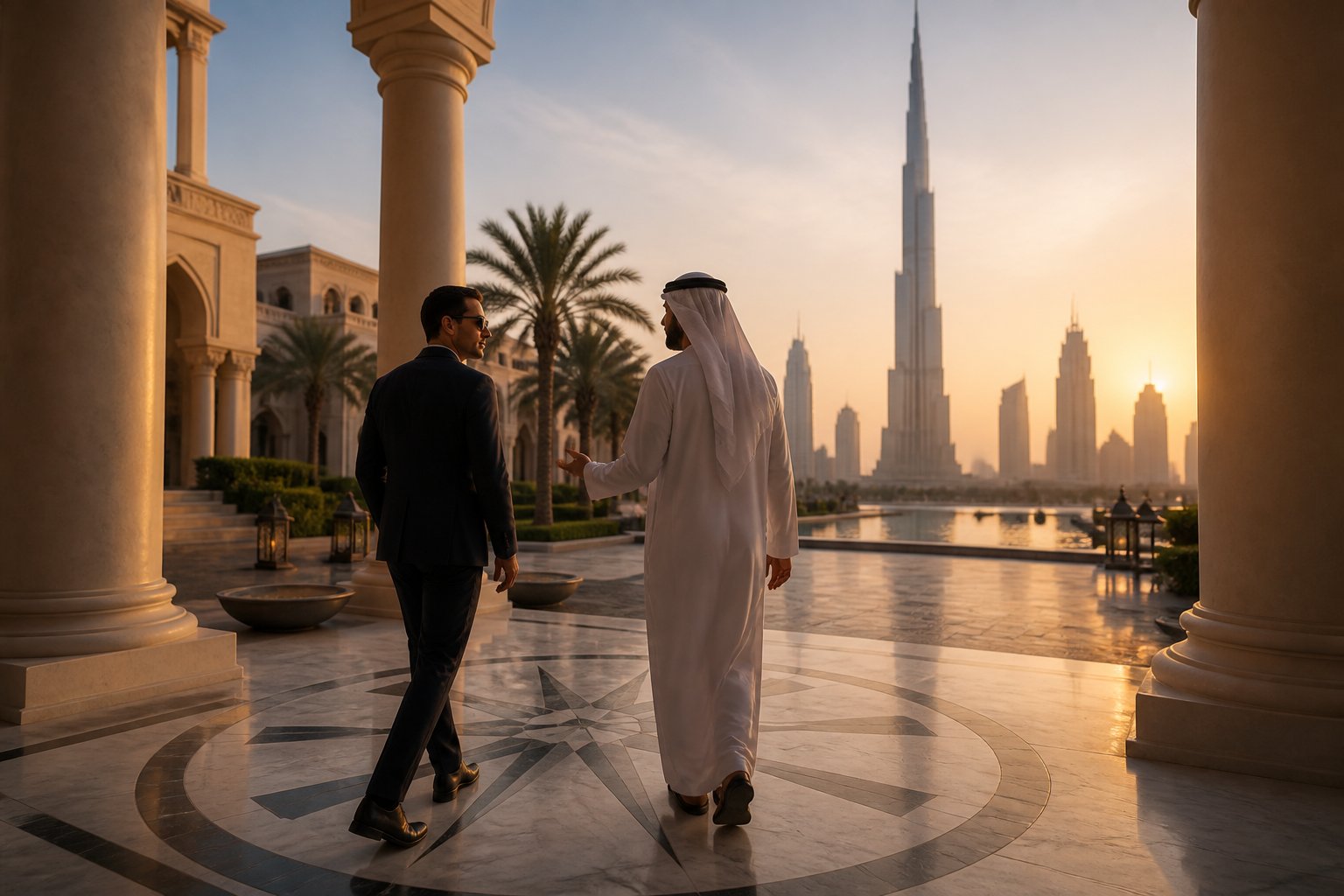
Every few months, a photo of a musician or actor posing in front of the Burj Khalifa sparks a wave of speculation online, with commenters pointing to hand gestures, jewelry, or hotel architecture as supposed proof of secret society membership. Dubai’s status as a global stopover for the famous makes it a natural setting for these theories.
There is no verified evidence linking celebrity trips to Dubai with Freemasonry, and organized Masonic lodges do not operate openly in the United Arab Emirates, where such fraternal organizations face legal restrictions. Most claims circulating on social media rely on symbol-spotting rather than documentation.
We think the more interesting story is why these theories keep reappearing. In this article, we look at the actual history of Freemasonry in the Gulf region, examine a few of the most-shared claims about celebrity visits, and separate what can be documented from what cannot.
Dubai’s Role as a Global Celebrity Destination
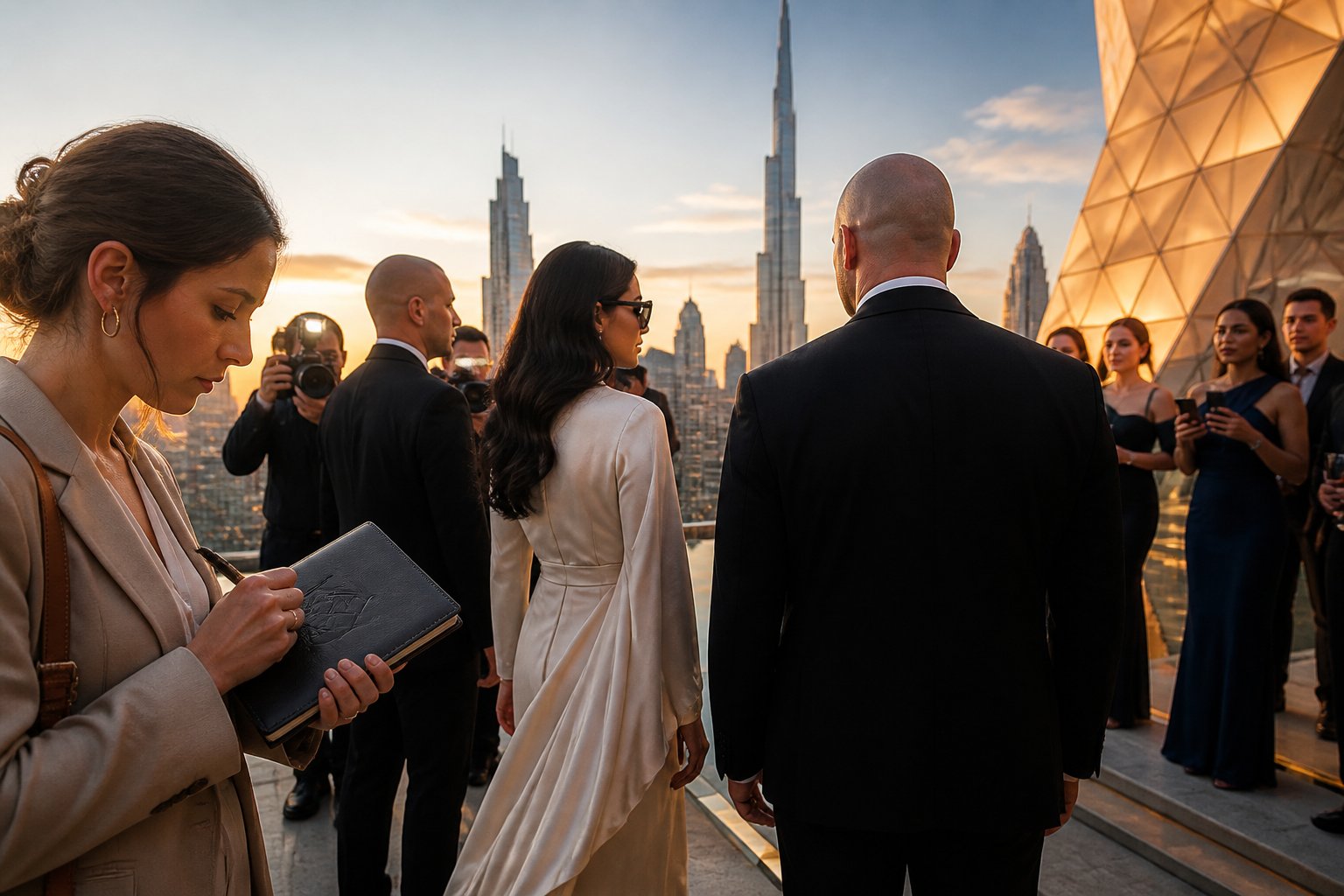
Dubai attracts A-list visitors through a combination of tax advantages, direct flight connections to most major cities, and an events calendar built around luxury sponsorship. That same visibility produces heavy media coverage, which in turn fuels speculation about what happens at private gatherings.
High-Profile Events and Luxury Hospitality
The city hosts a steady stream of events that reliably draw international names.
- Dubai World Cup at Meydan Racecourse, one of the richest horse races globally
- Emirates Airline Festival of Literature and the Dubai International Film Festival (which ran until 2018)
- Formula 1 weekends in neighbouring Abu Dhabi, with concert afterparties often held in Dubai
- Nightclub and residency bookings at venues in Palm Jumeirah and Business Bay
Hospitality is the other draw. Properties like Atlantis The Royal, Burj Al Arab, and One&Only Royal Mirage offer villa-level privacy, private beach access, and staff trained around discretion.
Beyoncé’s 2023 performance at the Atlantis The Royal opening is a useful example of how these elements combine — a hotel launch, a global headline act, and a heavily restricted guest list.
Add the UAE Golden Visa, which grants ten-year residency to qualifying investors and talent, and many celebrities move from visitor to part-time resident.
Media Coverage and Speculation Cycles
Every celebrity arrival in Dubai generates content, and much of that content is fragmentary.
Paparazzi access is limited compared with Los Angeles or London. Private events rarely permit photography, and UAE privacy laws restrict publishing images of people without consent.
The result is a gap between what audiences see and what actually happened.
That gap gets filled by social media. A short clip of a hand gesture, a black-and-white checkerboard floor, or a masked party theme circulates without context, and interpretation replaces reporting.
Luxury developers and tourism bodies also amplify celebrity appearances as marketing, which increases the volume of images in circulation. More images, less context, and restricted access together create conditions where symbolic readings — including Freemasonry claims — spread quickly and are difficult to verify or disprove.
Assessing Claims of Freemasonry Connections
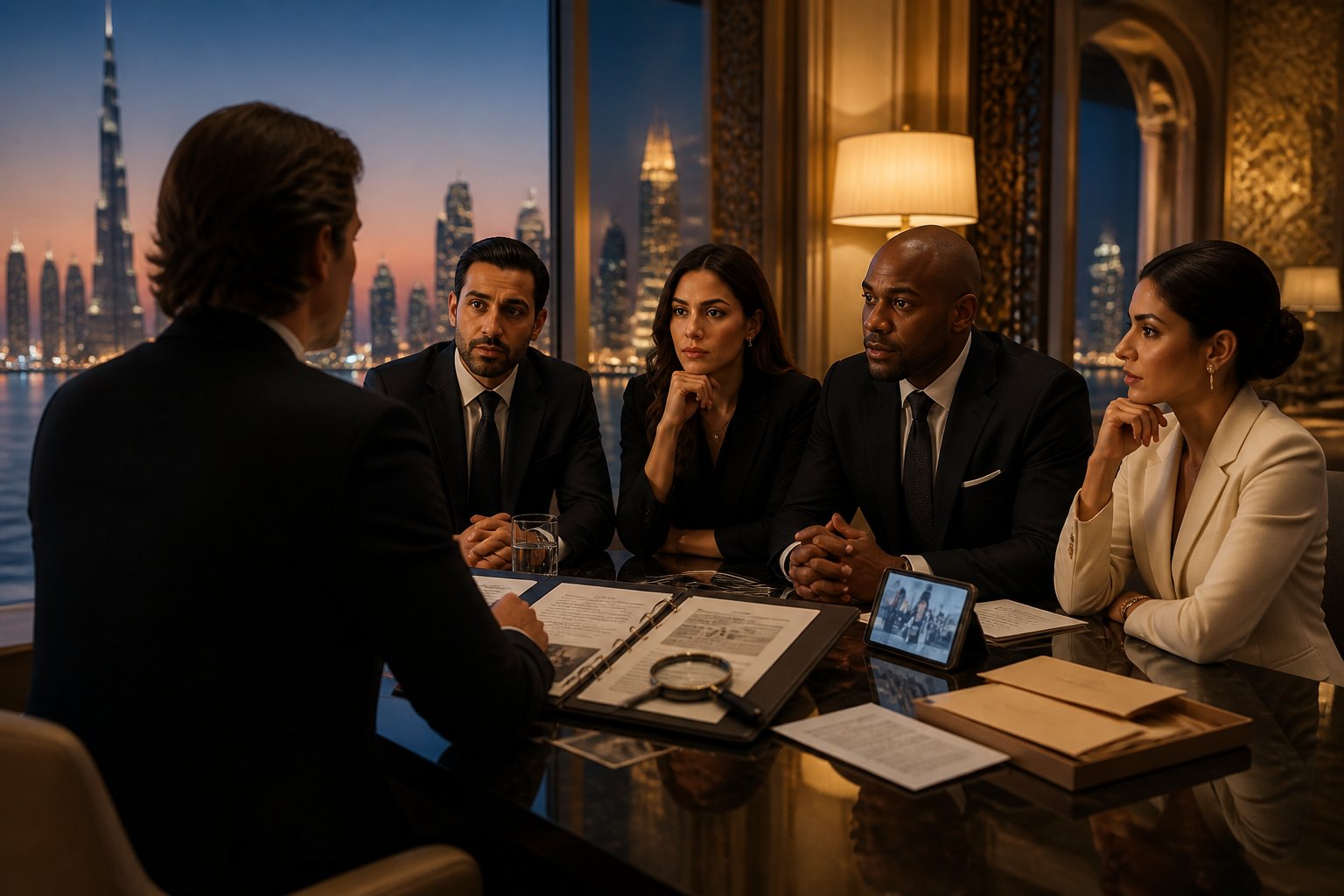
Claims linking visiting celebrities to Masonic lodges in Dubai rest almost entirely on photographs, hand gestures, and jewellery rather than membership records. Separating what can be verified from what circulates on social media requires attention to how lodges actually document members and how symbols get read online.
Distinguishing Documented Evidence From Rumor
Freemasonry keeps records. Regular lodges under recognised Grand Lodges maintain membership rolls, and confirmed members are typically identifiable through lodge histories, obituaries, or the individual’s own public statements.
That is the standard worth applying. A handful of public figures have openly acknowledged membership, but the overwhelming majority of celebrity claims lack any corresponding entry in a lodge register.
The situation in the UAE adds another layer. Freemasonry has no officially recognised status in the Emirates, and unregistered organisations of this kind operate without state sanction, which means there is no public Emirati lodge roll to check a name against.
- A Grand Lodge or individual lodge listing the person as a member
- The person confirming membership publicly
- Documented attendance at a lodge meeting
What does not:
- A photograph taken near a building alleged to be a lodge
- Shared travel dates with another supposed member
- Numerological calculations applied to names or dates
Cultural Symbols, Misinterpretation, and Online Narratives
Most Dubai-linked allegations follow a pattern researchers call symbolic decoding, where compasses, squares, all-seeing eyes, or triangular hand positions are read as coded signals.
The difficulty is that these shapes are common. A pyramid in a hotel’s architecture, a geometric logo on a stage set, or a performer’s habitual gesture can each be reframed as Masonic once someone is looking for it.
Hand signs draw particular attention. The so-called Due-Guard and similar gestures have been attributed to musicians and actors on the basis of a single frozen frame, though the same posture appears constantly in ordinary photographs.
Online, this material spreads through a familiar mechanism: a viral post makes a claim, aggregator accounts repeat it without attribution, and the repetition itself starts functioning as proof.
Dubai amplifies the effect. Its skyline, private venues, and reputation for wealth give these narratives a visually convincing setting, even when the underlying evidence amounts to a photograph and an assertion.