
Freemasonry has a documented history, but online claims about Hollywood celebrities and Masonic activity in Dubai often rely on speculation rather than verifiable evidence. We will examine what credible records support and where rumors begin.
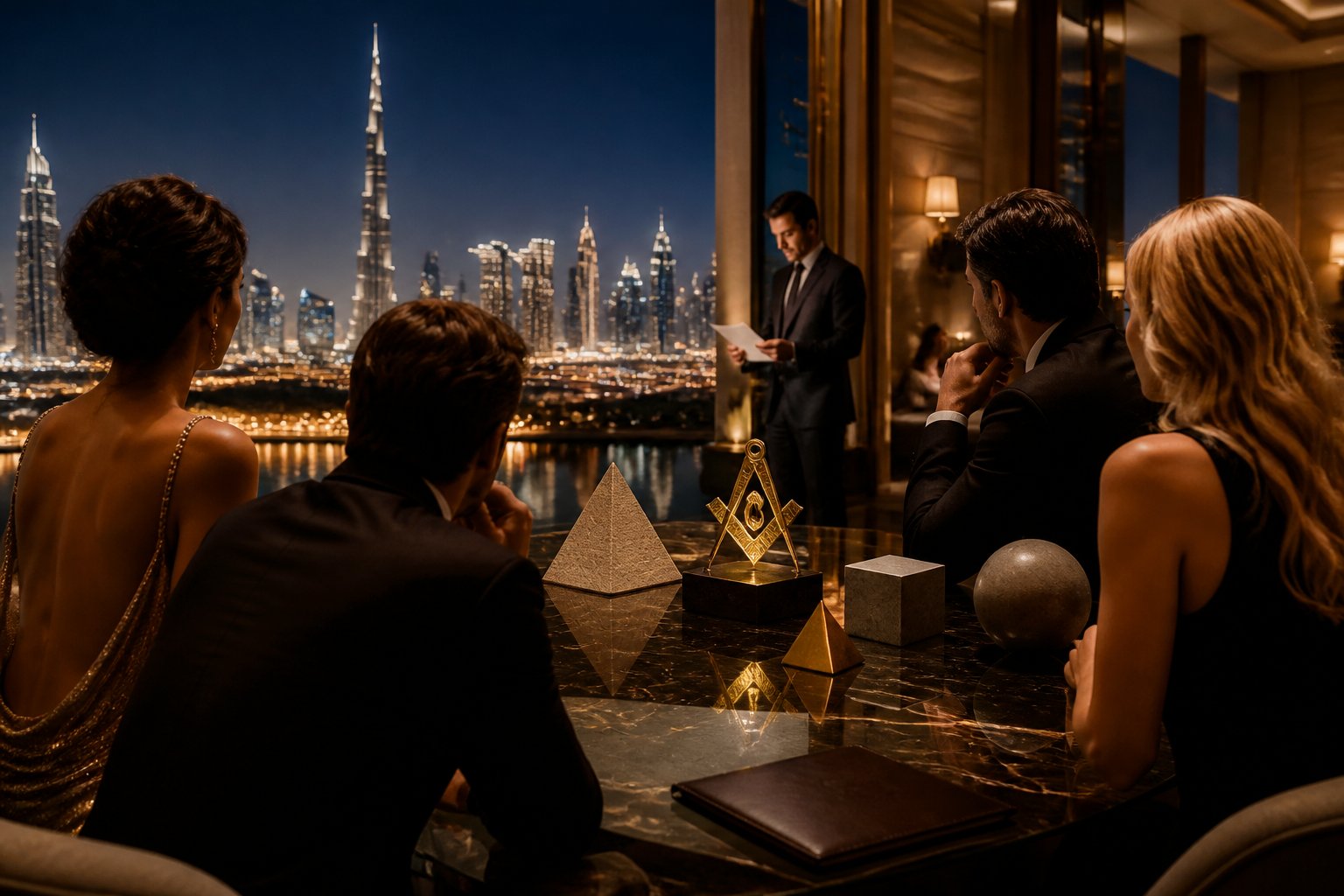
No reliable public evidence confirms that Hollywood celebrities maintain formal Freemason connections in Dubai; claims require specific, verifiable records rather than images, symbols, or anonymous posts. We will separate documented facts from online allegations and consider how responsible reporting protects people’s reputations.
Separating Documented Facts From Online Claims

We distinguish verified records from photographs, anonymous posts, and repeated rumors. A celebrity’s visit to Dubai, attendance at a public event, or contact with a Mason does not establish membership or participation in Masonic activities.
How Freemasonry Operates in Dubai
Freemasonry operates through private lodges and recognized Masonic organizations, where membership, meetings, and charitable activities follow internal rules. A lodge’s existence or a public reference to Freemasonry does not prove that a particular celebrity belongs to it.
We should verify claims through official lodge records, public statements, court documents, reputable reporting, or direct confirmation. Photographs showing a person near Masonic symbols provide context but rarely establish affiliation. We also need to distinguish Freemasonry from unrelated groups that use similar imagery, including social clubs, ceremonial organizations, or commercial events.
Dubai’s legal and regulatory environment also matters. We should not assume that a lodge mentioned online operates officially, publicly, or continuously in the emirate. Where reliable documentation does not identify a celebrity as a member, we should describe the connection as unverified rather than factual.
Common Sources of Celebrity Allegations
Online allegations often begin with a symbolic image, a guest-list claim, or a post that provides no source. Users may interpret hand gestures, geometric designs, formal ceremonies, or stage decoration as Masonic evidence, even though these features can have ordinary artistic, religious, or commercial meanings.
Search results can amplify the same unsupported claim when blogs, social-media accounts, and video channels repeat one another. Repetition does not create independent confirmation. We should check whether each source names its evidence, identifies the original report, and distinguishes fact from speculation.
| Claim type | What would verify it |
|---|---|
| Alleged lodge membership | An official record or direct confirmation |
| Attendance at a Masonic event | A reliable event record and identifiable photographs |
| Symbolic imagery | Context from the person or event organizers |
| Secret initiation claim | Corroborating primary documentation |
Without such evidence, we should report the allegation’s existence—not present it as proof of a celebrity’s Masonic connection.
Responsible Reporting and Reputation Considerations
We should distinguish documented evidence from rumor, protect individuals from unsupported allegations, and explain uncertainty plainly. Reliable reporting depends on primary records, attributable statements, careful wording, and attention to Dubai’s legal and cultural context.
Verifying Public Records and Statements
We should confirm any claimed connection through reputable primary sources, such as official membership records, court documents, event programs, organizational announcements, or a direct statement from the person concerned. A photograph at a Dubai venue, attendance at a charity event, or association with a host does not establish Freemason membership.
We should identify the source, publication date, and scope of each claim. If records remain unavailable, we should state that the allegation is unverified rather than presenting it as fact. We should also seek comment from the celebrity, representative, relevant organization, and event organizers, allowing reasonable time for a response.
Public figures retain privacy rights, particularly regarding family matters, private travel, and religious or fraternal affiliations. We should publish only details that serve a clear public-interest purpose and avoid repeating material merely because multiple outlets copied the same unverified claim.
Avoiding Defamation and Conspiracy Narratives
We should use precise language: “no public evidence confirms the claim” is safer and more informative than implying secret activity. Terms such as alleged do not automatically remove legal or ethical risk when surrounding text presents an accusation as established fact.
We should avoid linking unrelated details—such as hotel visits, business contacts, symbols, or social-media posts—to Freemasonry without credible evidence. We should not suggest that membership implies criminal conduct, political control, or hidden coordination. Such claims can damage reputations and reinforce conspiracy narratives.
Before publication, we should separate verified facts from interpretation, provide relevant context, and correct errors promptly. We should also consider applicable defamation, privacy, and media laws in the jurisdictions connected to the reporting, including Dubai and the publication’s home country.