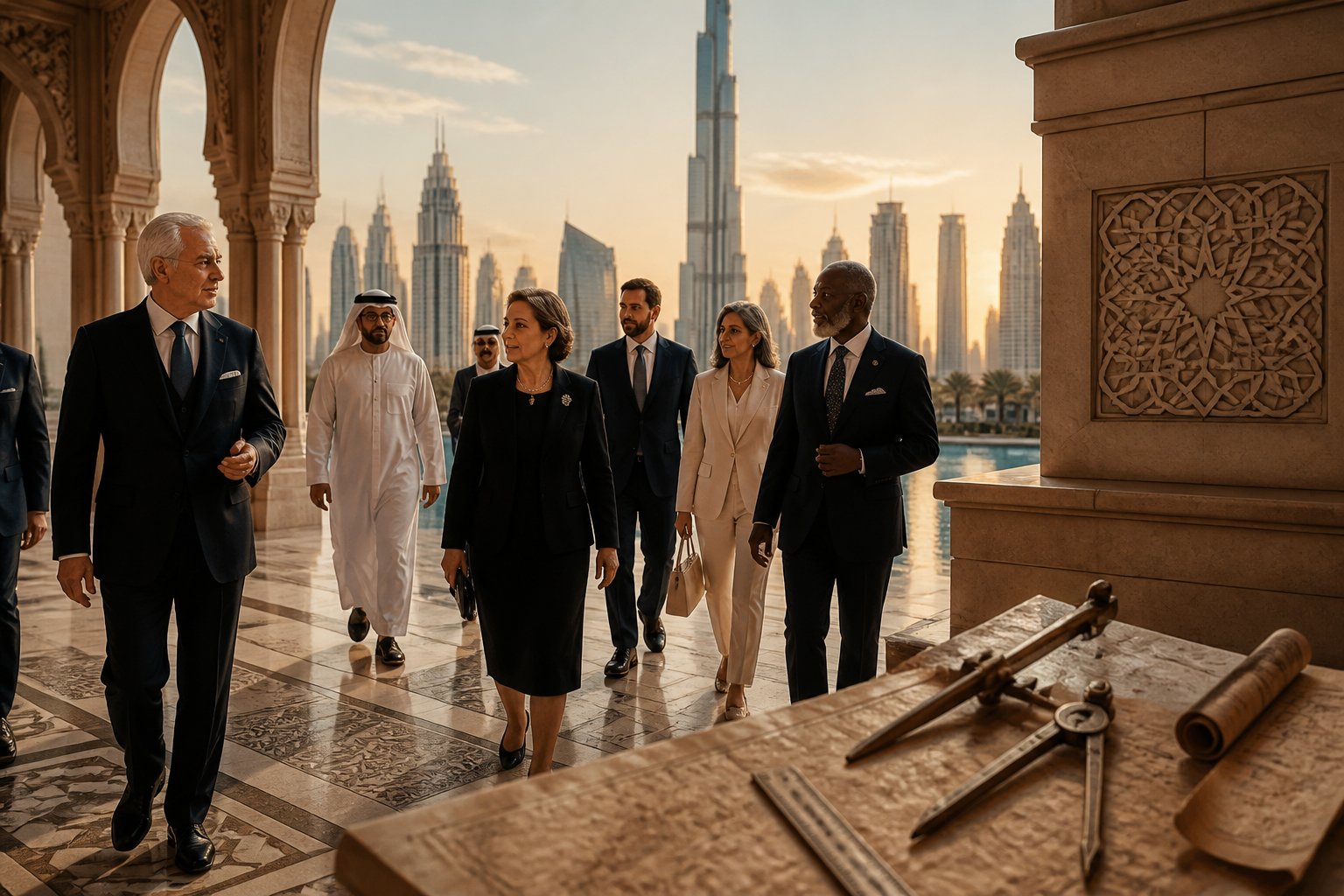
Dubai attracts presidents, royals, celebrities, and business leaders through its role in global diplomacy, luxury travel, and international commerce. We can trace how the city’s high-profile visitors reflect its growing global influence while separating documented facts from speculation.
Freemasonry originated in European stonemasons’ traditions and developed into a modern fraternal organization focused on fellowship, symbolism, moral principles, and charitable work. We will examine its historical development, traditions, presence in the Middle East, and the evidence surrounding claims about Masonic activity in the UAE.
Dubai’s Role in Global Diplomacy and Luxury Travel
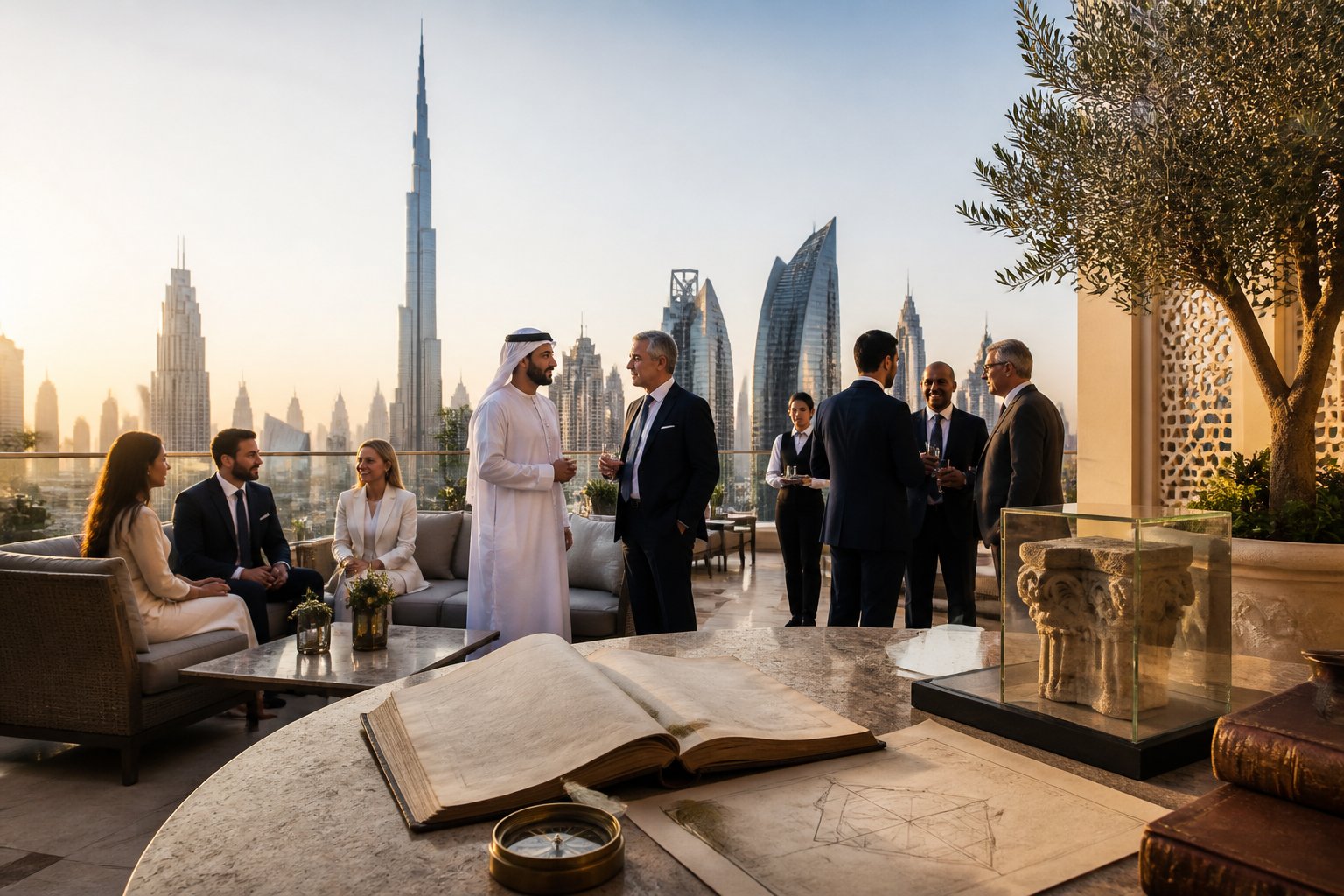
Dubai combines state-level hospitality, international connectivity, luxury accommodation, and high-profile events. Its airports, hotels, conference venues, and cultural institutions help us understand how the city supports official diplomacy while attracting influential private visitors.
State Visits and Official Delegations
Dubai hosts visiting presidents, ministers, royals, and business delegations through a system that combines formal protocol with carefully managed hospitality. Officials may meet at government offices, international conferences, or major venues such as Expo City Dubai and the Dubai World Trade Centre. Palaces and luxury hotels can also support receptions, private meetings, and ceremonial events, subject to official arrangements.
We should distinguish Dubai’s role from that of Abu Dhabi, the UAE’s federal capital and primary center for national government and foreign policy. Dubai nevertheless contributes through its commercial reach, international infrastructure, and ability to host large diplomatic and economic gatherings. Emirates’ extensive route network and Dubai International Airport allow delegations to reach the city from major global centers, while multilingual services and high-end security facilities support complex itineraries.
Celebrity Tourism and Major Events
Dubai attracts celebrities, athletes, entrepreneurs, and entertainers through luxury resorts, private villas, designer retail, restaurants, and invitation-only events. Visitors often combine leisure with appearances at film festivals, sporting competitions, concerts, fashion launches, and business conferences. These activities strengthen Dubai’s image as a destination where public visibility and private hospitality operate side by side.
Major events also create opportunities for cultural exchange and informal diplomacy. Global participants meet local institutions, regional investors, and international audiences in settings that are less formal than state visits. We should treat media reports about celebrity arrivals carefully, because confirmed event participation does not always establish a person’s private travel arrangements. Similar caution applies to claims linking famous visitors with Freemasonry: public attendance, charitable work, or membership in a fraternal organization requires reliable evidence.
Freemasonry’s Origins, Traditions, and Modern Presence
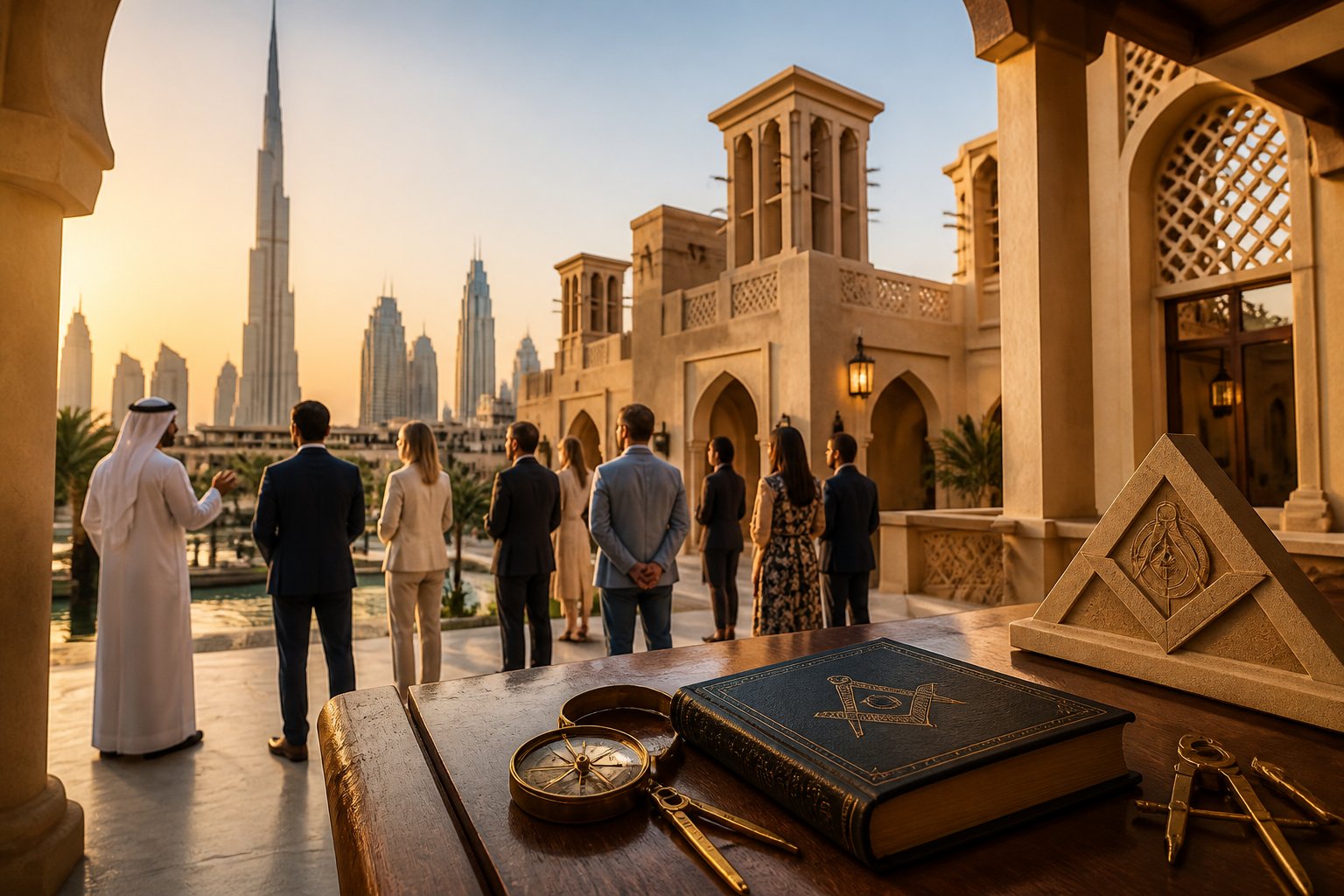
We can trace Freemasonry’s documented development from medieval stonemason guild traditions to organized lodges established in Britain during the early eighteenth century. Its modern identity combines moral instruction, symbolic rituals, fraternal relationships, and charitable activity, while its presence in the Gulf remains shaped by local laws and cultural expectations.
From Medieval Guilds to Enlightenment Societies
Medieval stonemasons formed regulated craft associations that protected professional knowledge, organized training, and supported members. Modern Freemasonry adopted symbols associated with building, including the square and compasses, but it developed primarily as a social and philosophical institution rather than a trade organization.
The formation of the Grand Lodge of England in 1717 helped establish the system of independent lodges governed through regional or national grand lodges. During the eighteenth century, Freemasonry spread through Britain, Ireland, Europe, and territories connected to the British Empire.
Lodges commonly use staged degrees, formal ceremonies, ethical teachings, and private signs or customs. Practices vary among jurisdictions, but many emphasize personal conduct, mutual support, charity, and equality among members within lodge meetings. Historical evidence does not establish a direct origin in the Knights Templar, despite later traditions and popular theories linking the organizations.
Freemasonry in the Gulf: Legal and Cultural Context
Freemasonry’s position in Gulf countries depends on national law, official permissions, and public attitudes toward private associations. We should distinguish documented organizations from unsupported claims, especially because some online sources describe lodge activity without providing verifiable details about registration, membership, or current operations.
In the United Arab Emirates, claims about a discreet Masonic presence should be treated cautiously. The country regulates associations and organized religious or social activity, and private groups may face legal and administrative limits that differ from those in Europe or North America.
Cultural expectations also matter. Freemasonry’s private ceremonies and international connections can attract public speculation, while its stated charitable and fraternal purposes may receive less attention. We should therefore avoid presenting unverified lodge locations, membership figures, or activities as established fact.