
The UAE is known for its skyline and modern development, but few people connect the country to Freemasonry. Yet lodges have existed there for decades, largely unnoticed by the public.

Freemasonry arrived in the UAE through British influence, as trade and administrative ties brought lodges to the Gulf region starting in the twentieth century. You’ll find that this history is tied closely to the broader spread of Freemasonry throughout territories once connected to the British Empire.
In this article, you’ll learn how Freemasonry took root in the UAE, which lodges were established, and how the organization has maintained a quiet presence in a rapidly modernizing nation.
Regional Origins and Early Masonic Networks

You can trace Freemasonry’s arrival in the Gulf region to the expansion of British commercial and military interests, which brought lodges and their members into contact with local populations. The fraternity’s presence in the area developed alongside trade routes, diplomatic missions, and the movement of workers across the region.
British Imperial Connections in the Gulf
You will find that British influence shaped much of the early Masonic activity in the Gulf. Colonial administrators, naval officers, and merchants often held Masonic membership before their arrival in the region.
These individuals established informal networks that later grew into recognized lodges. Military garrisons and political agencies stationed in Gulf territories provided a structural foundation for Masonic gatherings.
You should note that these early lodges typically operated under English or Scottish constitutions, reflecting the national origins of their founding members. Membership remained limited to expatriates, as the fraternity had not yet extended its reach into local communities.
Maritime Trade and Expatriate Communities
You can attribute much of Freemasonry’s early spread to the maritime trade networks connecting Britain, India, and the Gulf ports. Shipping companies, trading houses, and customs officials formed a significant portion of early lodge membership.
Port cities became natural gathering points where Masonic members from different backgrounds could meet regularly. This created a foundation of expatriate professionals who maintained Masonic ties despite operating far from established Grand Lodge headquarters.
Your understanding of this period benefits from recognizing that these communities were transient by nature. Workers, merchants, and officials rotated through postings, yet they carried Masonic connections with them, extending the fraternity’s informal reach across multiple Gulf locations.
Development Within the United Arab Emirates
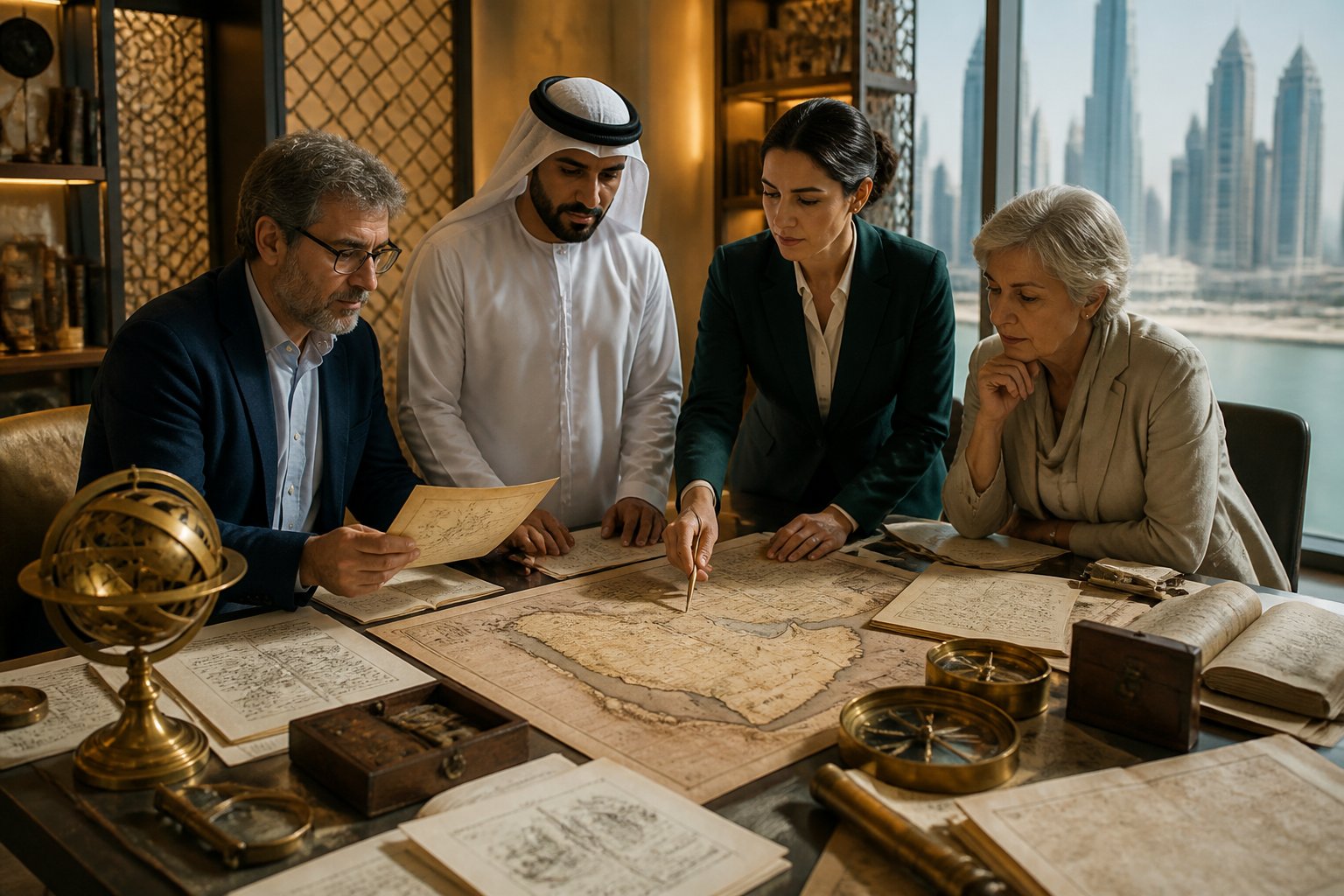
You can trace Freemasonry’s presence in the UAE through distinct phases: informal beginnings tied to trade and expatriate communities, a period of formal regulation after independence, and a modern era shaped by cultural sensitivity and limited public visibility.
Pre-Union Social and Commercial Context
Before 1971, you would have found the Trucial States operating as a loose federation of sheikhdoms under British protection.
Foreign traders, diplomats, and colonial administrators moved through ports like Dubai and Abu Dhabi, bringing with them institutions common in British commercial networks.
Freemasonry likely arrived through these channels rather than through any organized local initiative. Lodges connected to English or Scottish constitutions served small expatriate populations, mirroring similar developments across British-influenced Gulf territories.
You should note that documentation from this period is sparse. Membership remained low-profile, and meetings catered primarily to British and other Western nationals working in shipping, banking, and administration rather than to the local population.
Post-1971 Regulatory Environment
When the UAE formed in 1971, you encountered a new federal structure that changed how foreign organizations operated within the country.
Government oversight of social and civic groups increased, and Freemasonry fell under general regulations governing non-Islamic fraternal or social organizations.
Lodges did not disappear, but you would have seen them continue quietly, often under the umbrella of international lodge networks rather than as UAE-registered entities. Membership stayed largely confined to expatriates, particularly British, American, and other Western residents working in diplomacy, finance, and multinational business.
Key regulatory factors include:
- No formal legal recognition of Freemasonry as a public institution
- Continued oversight of foreign social clubs and private gatherings
- Reliance on diplomatic or expatriate community networks for continuity
Contemporary Presence and Public Understanding
Today, you will find limited public information about active lodges in the UAE, reflecting both privacy conventions and broader regional attitudes toward secretive organizations.
Public discourse, including UAE newspaper features referencing personal family histories, occasionally surfaces to acknowledge that Masonic membership existed among earlier expatriate generations.
You should understand that this reflects historical presence rather than widespread public acceptance or promotion. Freemasonry remains a private matter, discussed more through personal or journalistic accounts than institutional transparency.
Public understanding in the UAE mixes curiosity with skepticism, shaped partly by broader Middle Eastern narratives that associate Freemasonry with foreign influence or secrecy. You are unlikely to find active recruitment or public lodge activity comparable to Western countries, as the organization maintains a low profile suited to the UAE’s social and legal context.