
Masonic symbols form a visual language that connects ethical lessons, personal discipline, and shared tradition. We can understand these symbols as tools Freemasonry uses to express moral principles through images, objects, and ritual.
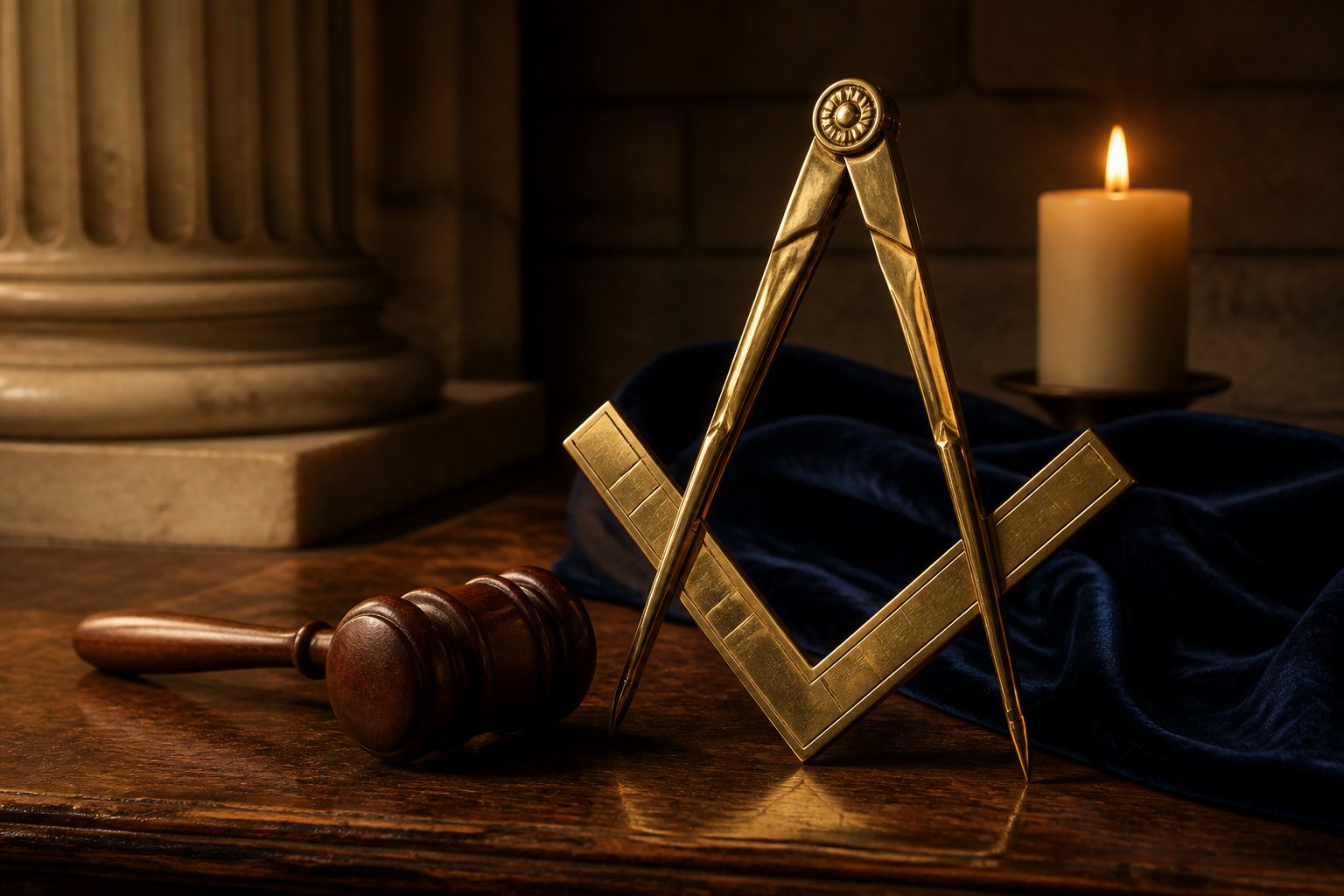
Their meanings developed through historical influences and lodge practices, so context matters. We will examine their origins, ritual use, and the significance of familiar emblems such as the square and compasses, the all-seeing eye, the letter G, and the pillars of Boaz and Jachin.
Origins, Meanings, And Ritual Context
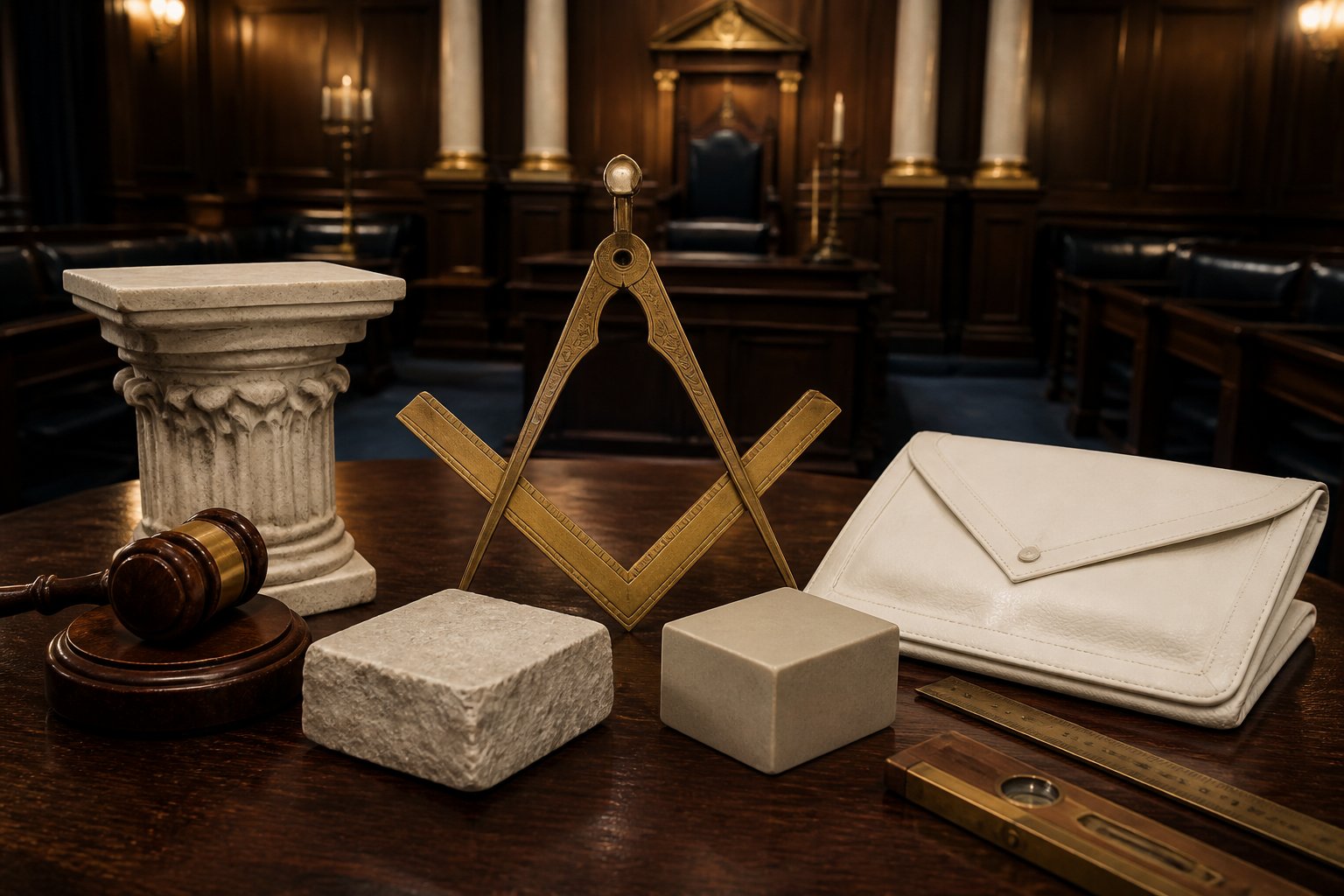
Masonic symbols developed from medieval building practices, biblical imagery, geometry, and Enlightenment-era moral teaching. We interpret them through lodge traditions, degree ceremonies, and the customs of particular jurisdictions.
Historical Development
We trace many Masonic symbols to the tools and working methods of medieval stonemasons. The square, compasses, level, plumb, and trowel once served practical construction purposes; later Masons used them as moral and philosophical emblems.
Freemasonry took recognizable modern form in Britain during the seventeenth and eighteenth centuries. As lodges shifted from operative craft associations toward speculative Freemasonry, builders’ tools gained ethical meanings. The square came to represent honest conduct, while the compasses expressed restraint and measured behavior.
Other symbols draw from older sources. The pillars, commonly called Boaz and Jachin, connect Masonic imagery with the biblical Temple of Solomon. The all-seeing eye reflects themes of divine observation and moral accountability, although its meaning and prominence vary across jurisdictions.
Allegorical Interpretation
We read Masonic symbols as prompts for reflection rather than as objects with one universally fixed definition. A symbol can carry a traditional interpretation while also encouraging personal application within the framework of a degree or lodge lesson.
The rough ashlar and perfect ashlar illustrate moral improvement. The rough stone represents a person’s unfinished character; the shaped stone represents disciplined effort toward greater integrity. The 24-inch gauge traditionally divides time among work, service, and rest, while the common gavel signifies removing undesirable habits.
The letter G receives different explanations depending on the jurisdiction. It may refer to God, geometry, or both. Masonic teaching commonly links geometry with order, proportion, and the study of creation, but individual lodges may emphasize these ideas differently.
Use In Lodge Ceremonies
Symbols gain much of their meaning through placement, movement, spoken explanations, and the sequence of degree work. During ceremonies, officers may display or handle working tools while presenting lessons about conduct, duty, knowledge, and personal development.
The square and compasses usually occupy a central position among lodge furnishings, often alongside a volume of sacred law. Their arrangement and interpretation differ by jurisdiction, and Masonic bodies may use different sacred texts according to members’ traditions.
We should distinguish public symbolism from private ritual details. Lodges commonly explain broad emblematic meanings in lectures and educational materials, while specific words, signs, and ceremonial procedures may remain restricted to members. Lighting, floor arrangements, officer roles, and degree structure can also vary between Masonic jurisdictions.
Common Emblems And Their Significance
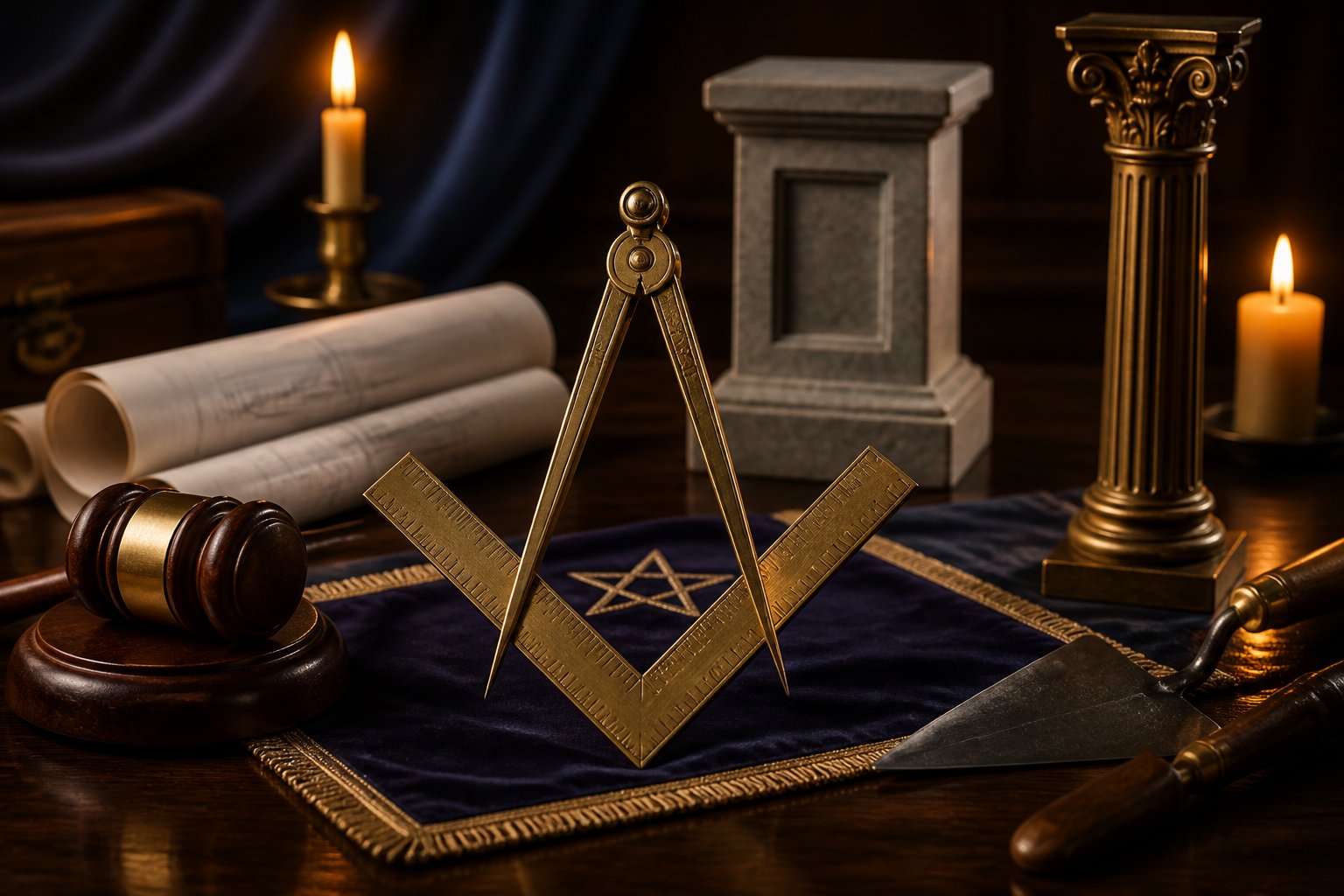
Masonic emblems connect practical building tools with ethical instruction. Their meanings can vary by lodge and tradition, but they commonly address moral conduct, spiritual awareness, personal discipline, and the responsibilities of membership.
Square And Compasses
The square and compasses form Freemasonry’s best-known emblem. We commonly interpret the square as a reminder to act fairly, honestly, and uprightly toward others. Its practical use in construction gives the symbol a direct connection to accuracy and sound workmanship.
The compasses represent restraint and measured behavior. They encourage us to control personal desires, keep conduct within ethical limits, and respect the boundaries of others. Together, the two tools express the need to align judgment with disciplined action.
Some versions place the letter G between the tools. Depending on the jurisdiction and context, it may refer to God or to geometry, reflecting both spiritual belief and the mathematical principles associated with building. We should treat these interpretations as traditional rather than universally fixed.
All-Seeing Eye
The All-Seeing Eye, often called the Eye of Providence, commonly represents divine observation and moral accountability. It reminds us that private actions still carry ethical significance, even when no human observer is present.
Eye imagery existed in several earlier religious and cultural traditions, so Freemasonry did not originate the symbol. Masonic use developed within a broader system of emblems that encourages reflection on providence, conscience, and responsible conduct.
We should distinguish the emblem from claims that it proves hidden political control or a universal secret meaning. Its interpretation depends on the lodge, jurisdiction, and accompanying design. In many settings, it functions as a reminder to live according to one’s principles.
Pillars, Apron, And Working Tools
The pillars commonly represent the entrance to King Solomon’s Temple and appear in Masonic ritual and decoration. They can suggest strength, stability, balance, and the passage from ordinary life into a setting devoted to moral instruction. Their precise names and symbolism may differ among Masonic jurisdictions.
The apron recalls the protective garment worn by operative stonemasons. We often treat it as a sign of labor, purity of conduct, and honorable service. Its design, color, and ornamentation can indicate a member’s degree or office.
Other working tools extend these lessons. The level represents equality, the plumb encourages upright behavior, and the trowel symbolizes spreading unity and goodwill. These objects retain their practical identities while serving as prompts for personal discipline and ethical work.