
Freemasonry and community service raise important questions in the UAE, where charitable work operates within clear legal and cultural boundaries. We can examine the subject without relying on speculation, focusing on documented history, current regulations, and responsible civic engagement.

In the UAE, any community service linked to Freemasonry must comply fully with local laws, licensing requirements, and official oversight. We will consider what is known about Masonic activity in the country, why claims about lodges require careful verification, and how approved charitable initiatives can support communities responsibly.
Our discussion will also explore practical service priorities, including volunteering, transparent partnerships, and respect for the UAE’s institutions and diverse population.
Masonic Presence and Legal Context in the UAE

Freemasonry has a limited and poorly documented history in the Gulf, with no clearly verified public network of UAE-based lodges. We should distinguish historical references and informal claims from officially recognized organizations, while treating local law as the controlling factor for any community activity.
Historical Background
Freemasonry reached parts of the Middle East through European military, commercial, and administrative networks during the nineteenth and twentieth centuries. Historical research records masonic clubs or informal gatherings in some Gulf states, including Bahrain, but evidence for continuously operating, publicly recognized lodges in the UAE remains limited.
Some sources claim that a lodge was proposed or approved in Dubai, yet such reports lack clear public confirmation. Other accounts describe meetings connected to foreign military bases or expatriate communities rather than an openly established UAE organization. We should therefore avoid presenting online directories, forum posts, or unverified historical reports as proof of a current lodge.
Freemasonry’s charitable traditions may resemble other forms of civic service, but that similarity does not establish legal recognition or permission to operate. Community groups must identify themselves accurately and avoid implying official Masonic status without reliable documentation.
Regulatory Considerations
The UAE regulates associations, fundraising, religious activity, and organized groups through federal and emirate-level laws and licensing systems. We should not assume that a private meeting, charitable project, or foreign affiliation is lawful merely because participants act discreetly or hold membership elsewhere.
Public sources and online discussions make conflicting claims about Freemasonry’s legal status in the UAE. Because those claims vary and may be outdated, we should obtain advice from a UAE-licensed lawyer and consult the relevant local authority before organizing meetings, collecting donations, using Masonic symbols, or representing an overseas lodge.
| Activity | Practical compliance issue |
|---|---|
| Public meetings | May require approval or a licensed entity |
| Fundraising | Often requires specific authorization |
| Foreign lodge affiliation | Does not automatically create UAE permission |
| Charitable service | Should operate through an approved organization |
We should also respect venue rules, immigration conditions, and restrictions on unlicensed associations. When supporting community projects, partnering with a registered UAE charity provides a clearer legal and administrative structure.
Community Service Priorities and Responsible Engagement
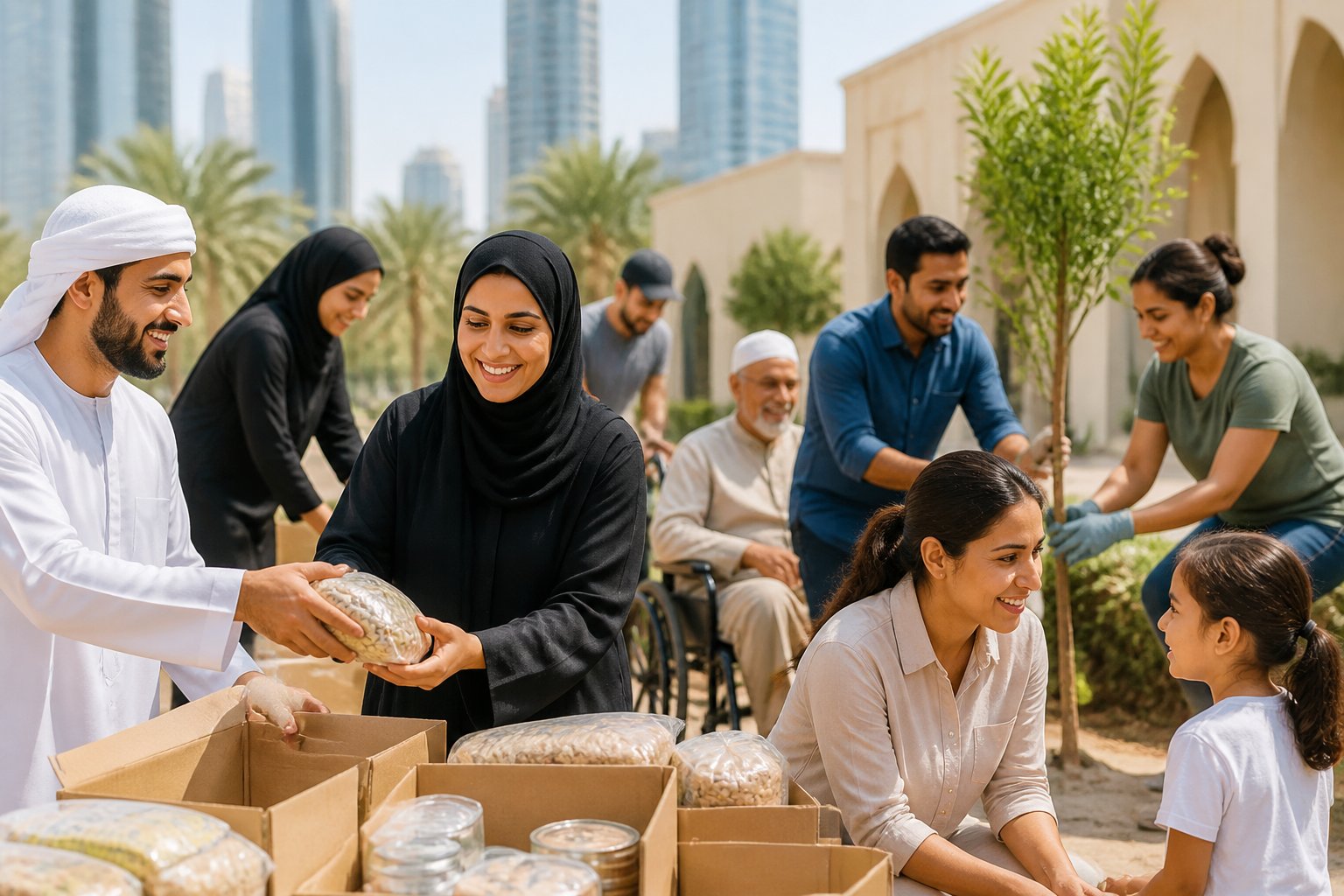
We should direct charitable work toward verified local needs, use accountable partnerships, and measure assistance by results rather than visibility. Respect for UAE laws, religious values, cultural diversity, and community expectations should guide every activity.
Charitable Partnerships
We should work through licensed charities, public-benefit organisations, hospitals, schools, and community groups rather than distributing aid informally. Established partners can confirm eligibility, protect beneficiary privacy, and manage donations in line with UAE regulations.
Before committing funds or volunteers, we should verify an organisation’s legal status, governance, safeguarding procedures, and financial reporting. A written agreement should define responsibilities, permitted use of funds, reporting dates, and procedures for handling complaints.
Suitable priorities may include food assistance, healthcare support, education, disability services, and emergency relief. We should avoid duplicating existing programmes and consult partner organisations about gaps they can document. Public communications must obtain consent and should never use vulnerable people’s images or personal stories to promote the lodge.
Volunteer Initiatives
We can support structured volunteering through approved programmes and public-benefit organisations. Useful activities include packing food parcels, assisting at community events, tutoring through authorised providers, supporting hospital administration, and helping with environmental clean-ups where organisers provide training and supervision.
Each initiative should have a named coordinator, a clear task description, attendance records, and basic risk controls. We should screen volunteers when work involves children, older adults, patients, or people with disabilities, and we should follow the host organisation’s rules on confidentiality and conduct.
Volunteering should complement professional services, not replace qualified staff. We can track practical measures such as volunteer hours, beneficiaries reached, supplies delivered, and partner feedback while avoiding inflated claims.
Cultural Sensitivity and Public Trust
We should present community service as lawful civic responsibility, not as recruitment or religious advocacy. Activities must respect the UAE’s legal framework, Islamic values, national identity, and the country’s diverse population.
Clear public information helps prevent misunderstanding. We should identify the sponsoring organisation, state the charitable purpose, explain how donations or data will be handled, and provide a contact for concerns. We should avoid partisan messaging, unverified claims, confidential information, and publicity that pressures beneficiaries.
Members should follow venue rules, dress appropriately, obtain permission before photographing or recording, and use trained interpreters when needed. Independent partners, transparent reporting, and prompt responses to complaints can strengthen confidence among residents and authorities.